You fill up your tire, drive for a few days, and notice the tire pressure warning light is back on. You check the tread, but there’s no nail, screw, or obvious damage in sight. So, why does your tire keep losing air?
A tire can develop a slow leak for several reasons, and not all of them leave a visible puncture. The problem could be a tiny hole in the tread, a leaking valve stem, or a poor seal between the tire and wheel. Sometimes, a drop in temperature is responsible for the change in pressure.
If your tire is losing air slowly, identifying the cause can help you avoid unexpected flats and unnecessary tire replacement. Here’s what Fort Collins drivers should know.
Key Takeaways
- A tire can lose air through a small puncture, damaged valve stem, leaking bead seal, or damaged wheel, even when no hole is visible.
- Cold weather lowers tire pressure, but one tire that repeatedly loses more air than the others may have a leak.
- A tire pressure warning light that keeps returning is a reason to check your tire pressures and investigate the cause.
- Some slow leaks can be repaired, but the location and extent of the damage determine whether a tire is safe to repair.
- A tire shop can locate hard-to-find leaks and recommend the appropriate repair or replacement.
Why Is My Tire Losing Air Without a Visible Puncture?
A tire relies on several components to hold air. The rubber itself must remain intact, the valve must seal properly, and the tire must fit securely against the wheel. If air escapes through any of these areas, your tire can gradually lose pressure.
The leak may be too small to spot during a quick visual inspection. It may also be hidden on the inner side of the tire or near the wheel. That’s why repeatedly adding air doesn’t necessarily solve the problem. If the pressure keeps dropping, the next step is to find out where the air is escaping.
7 Common Causes of a Tire Losing Air Slowly
1. A Small Puncture Hidden in the Tread
A nail, screw, or sharp piece of debris can create a tiny hole that releases air gradually. In some cases, the object stays lodged in the tire and partially seals the opening. The tire may hold pressure for several days before you notice a problem.
The puncture may also be located on the inner side of the tire, where it’s difficult to see without removing the wheel.
What to watch for: One tire consistently needs more air than the others, even when outdoor temperatures remain fairly stable.
If you find an embedded object, leave it in place and have the tire inspected. Removing it yourself could cause the tire to lose air more quickly.
2. A Leaking Valve Stem or Valve Core
The valve stem is the small fitting you use to add air to your tire. Inside it, a valve core helps keep that air from escaping. Over time, the valve stem can crack or become damaged. The valve core may also loosen or fail to seal properly.
These problems can cause a slow leak without any damage to the tire tread.
What to watch for: Air loss that seems to come from the valve area rather than the tire itself.
A technician can check the valve stem and core to determine whether either component needs attention.
3. A Poor Seal Between the Tire and Wheel
The edge of your tire, called the bead, sits against the wheel to create an airtight seal. If that seal is compromised, air can escape where the tire meets the rim.
A poor bead seal may result from corrosion, debris, wheel damage, or an issue with how the tire sits on the wheel.
What to watch for: A tire that keeps losing pressure despite having no visible tread damage.
A tire shop can inspect the bead and wheel to determine whether the sealing surface needs cleaning, servicing, or further repair.
4. A Bent or Damaged Wheel
Hitting a pothole or curb can damage your wheel. Even a small bend may affect the seal between the tire and rim.
Wheel damage isn’t always obvious from the outside. The inner edge of the wheel may be bent while the visible face looks normal.
What to watch for: Air loss that starts after a pothole impact, particularly if you also notice a new vibration while driving.
A technician can inspect the wheel and tire together to determine whether either component needs repair or replacement.
5. Corrosion Around the Wheel
Corrosion can develop around the area where the tire bead meets the wheel, particularly when moisture and road salt are present. Over time, corrosion may create an uneven sealing surface that allows air to escape.
This issue can occur even when the tire itself is in otherwise good condition.
What to watch for: Recurring pressure loss with no visible puncture, especially on a wheel that shows signs of corrosion.
The appropriate fix depends on the condition of the wheel and its sealing surface.
6. Aging or Damaged Tire Rubber
Tires can develop cracks and other damage as they age or experience wear. Damage to the sidewall, bead, or inner structure may allow air to escape. Some problems are difficult to identify without a thorough inspection.
What to watch for: Visible cracking, bulges, cuts, or repeated air loss in an older or damaged tire.
Not all tire damage can be repaired safely. A tire shop like McCormick Tires & Lube can assess the condition of the tire and explain whether replacement is necessary.
7. Changes in Outdoor Temperature
Not every drop in tire pressure means you have a leak.
As outdoor temperatures fall, the air inside your tires contracts and the pressure decreases. A common rule of thumb is that tire pressure changes by about 1 PSI for every 10°F change in temperature, although the exact amount varies.
That means a sudden cold snap in Fort Collins could trigger your tire pressure warning light even when your tires are in good condition.
What to watch for: A similar pressure drop across multiple tires after a significant temperature change.
If one tire continues to lose air faster than the others, however, have it checked for a leak.
How Can You Tell If You Have a Slow Tire Leak?
A slow leak may not leave you with an obviously flat tire. Instead, you might notice a pattern over several days or weeks.
Common signs include:
- Your tire pressure warning light keeps coming back on.
- One tire needs air more often than the others.
- A tire looks slightly lower than usual.
- Your vehicle feels different while driving.
- Tire pressure drops repeatedly, even when temperatures are stable.
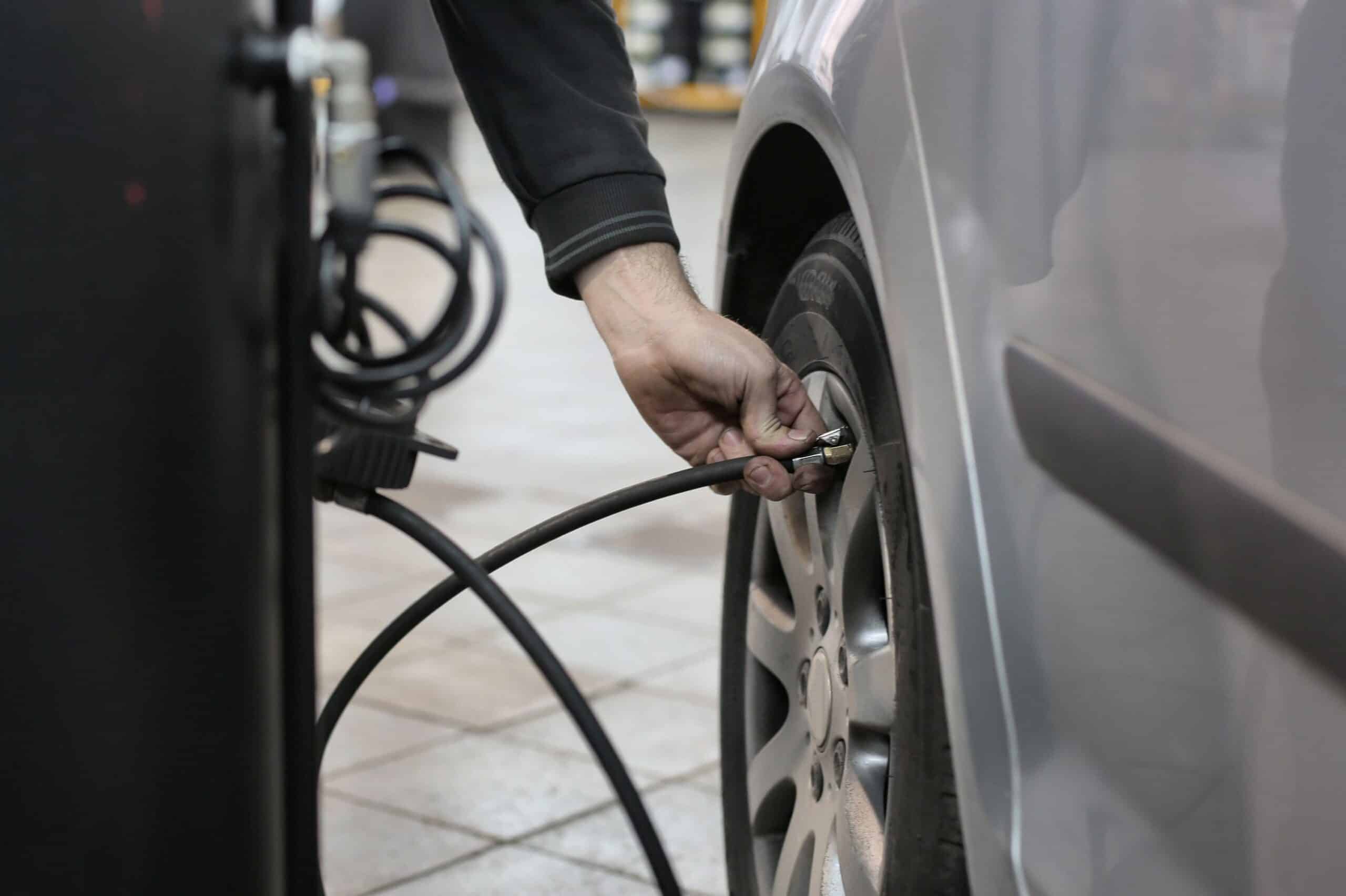
The most useful way to track the problem is to check your tire pressure with a reliable gauge.
Measure the pressure when the tires are cold, ideally before driving or after the vehicle has been parked for several hours. Compare the reading with the pressure listed on your vehicle’s tire information placard, usually found inside the driver’s door.
Use your vehicle manufacturer’s recommended pressure, not the maximum pressure printed on the tire sidewall. If one tire repeatedly drops below the recommended pressure, schedule an inspection.
Is It Safe to Drive on a Tire That Keeps Losing Air?
Driving on an underinflated tire can affect handling, braking, and tire wear. It can also cause the tire to generate excess heat, increasing the risk of internal damage or failure.
The level of risk depends on how much pressure the tire has lost, how quickly it is losing air, and whether the tire has already sustained damage.
If a tire is severely underinflated, visibly flat, or losing air rapidly, don’t continue driving on it. Use your spare tire if your vehicle has one and you can install it safely, or arrange roadside assistance.
If the tire is losing air slowly, check its pressure and arrange an inspection promptly. Repeatedly adding air without addressing the cause isn’t a long-term solution.
Can a Slow Tire Leak Be Repaired?
Sometimes. Whether a tire can be repaired depends on where the leak is located and the condition of the tire.
A small puncture in the repairable tread area may qualify for a professional repair. The technician must also inspect the inside of the tire for damage that may not be visible from the outside.
A proper puncture repair generally involves removing the tire from the wheel, inspecting it internally, and using an approved repair method that seals both the injury channel and the inner liner. However, some tires must be replaced.
Damage that may make a tire unsafe to repair includes:
- Punctures in the sidewall or shoulder
- Large punctures or extensive cuts
- Bulges or signs of structural damage
- Internal damage caused by driving while severely underinflated
- Excessive tread wear or other conditions that make the tire unsafe
A tire that looks repairable from the outside may still have hidden internal damage. A professional inspection is necessary before deciding whether to repair or replace it.
How Does a Tire Shop Find a Slow Leak?
When a tire keeps losing air without a visible puncture, a technician can inspect areas that are easy to miss at home.
The process may include:
- Checking the tire’s current pressure and overall condition
- Inspecting the tread and sidewalls for punctures or damage
- Checking the valve stem and valve core for leaks
- Examining the seal between the tire and wheel
- Inspecting the wheel for bends, cracks, or corrosion
- Using an appropriate leak-detection method to locate escaping air
Once the leak is located, the technician can determine whether the issue involves the tire, valve, bead seal, or wheel.
They can then recommend a repair or replacement based on the condition of the affected components.
Frequently Asked Questions About Tires Losing Air
Why does my tire keep losing air if there’s no nail in it?
A tire can lose air through a small puncture that’s difficult to see, a leaking valve stem, a poor bead seal, or a damaged wheel. Temperature changes can also lower tire pressure.
If the same tire repeatedly loses pressure, have it inspected to find the cause.
Why is only one of my tires losing air?
If one tire loses pressure faster than the others, it may have a leak or sealing problem.
Cold weather generally affects all four tires, although their pressure readings may not be identical. Repeated air loss in a single tire deserves closer attention.
How much tire pressure loss is normal?
Tire pressure changes with temperature, and tires can gradually lose small amounts of air over time.
However, a tire that repeatedly needs air or loses pressure noticeably faster than the others may have a slow leak. Check your pressures regularly and have unusual pressure loss investigated.
Can a tire lose air without a puncture?
Yes. A leaking valve stem, poor bead seal, wheel corrosion, or wheel damage can allow air to escape even when the tire has no puncture.
A tire shop can inspect these components to locate the source of the leak.
Will a slow tire leak eventually become a flat?
It can. A slow leak may gradually leave your tire severely underinflated or flat. The rate of air loss can also change if the damage worsens or an embedded object shifts.
Don’t assume a slow leak will remain slow. Have the tire checked before it leaves you stranded.
Should I use a tire sealant to fix a slow leak?
Tire sealants may be intended for temporary emergency use, depending on the product and vehicle. They are not a substitute for a professional inspection and appropriate repair.
Sealant may also complicate tire servicing, so tell your tire technician if you have used one.
Why Choose McCormick Tires & Lube for Tire Repair in Fort Collins?
A tire that keeps losing air can be frustrating, especially when you can’t see what’s causing the problem. At McCormick Tires & Lube, we help Fort Collins drivers identify tire problems and understand their repair or replacement options.
Whether you’re dealing with a slow leak, a damaged tire, or recurring pressure loss, our team can inspect the issue and recommend the appropriate next step.
Tire Losing Air? Let’s Find the Cause.
If you keep adding air to the same tire, don’t wait for it to go completely flat.
A slow leak may come from a small puncture, a valve problem, or a poor seal around the wheel. Finding the cause early can help you avoid further tire damage and an unexpected roadside stop.
Schedule a tire inspection with McCormick Tires & Lube in Fort Collins to find out why your tire keeps losing air and whether it can be safely repaired.